

Local businesses do not need millions of impressions. They need the right people within driving distance to care.
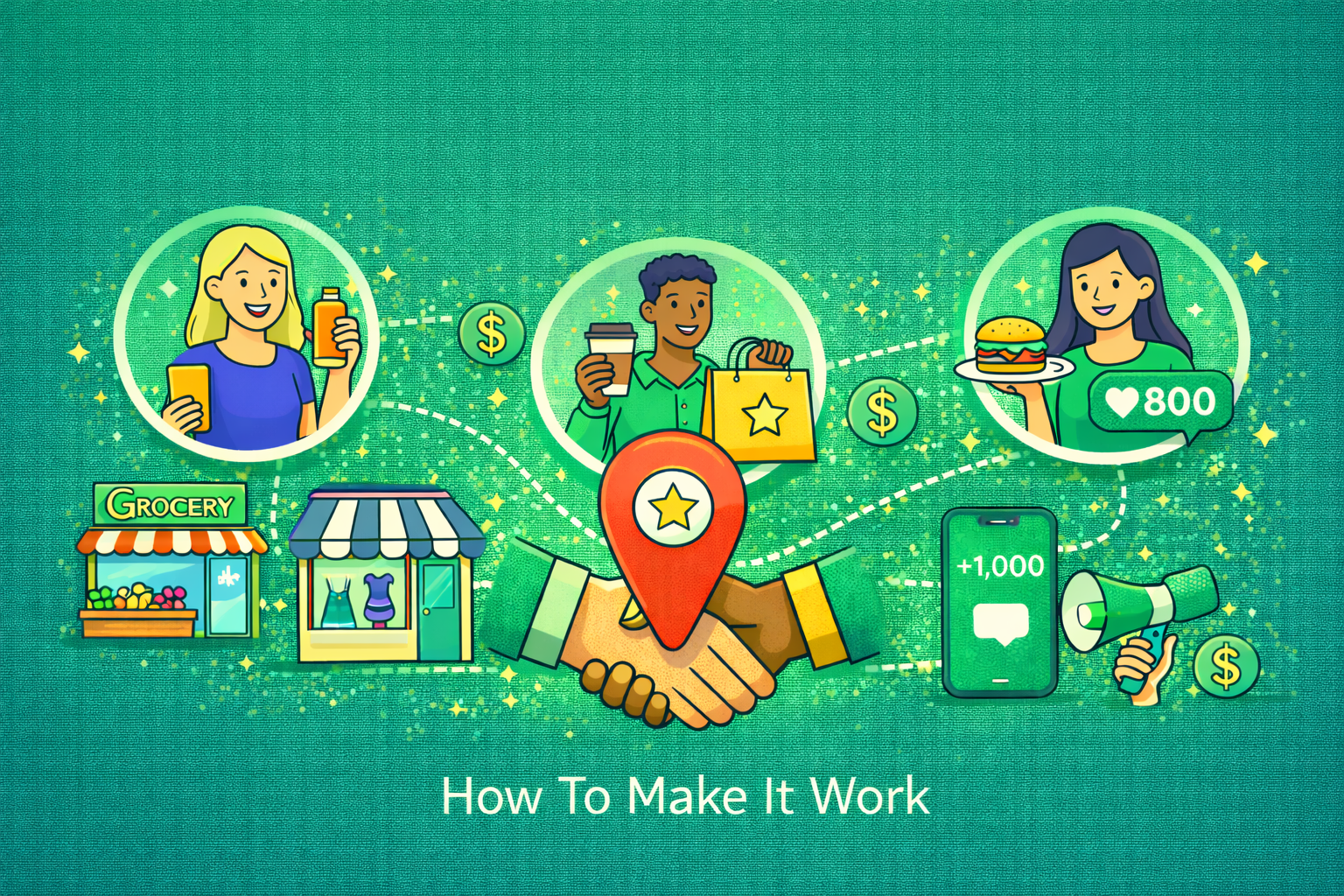
National influencer strategies often focus on scale. Local influencer marketing focuses on proximity, familiarity, and community trust. When done well, it turns neighborhood voices into credible advocates.
For restaurants, gyms, salons, real estate agents, retail stores, and service providers, local influencer marketing can outperform paid ads because it mirrors how communities make decisions: through recommendation and reputation.
Nielsen (2015) reports that consumers consistently rank personal recommendations among the most trusted forms of marketing. At the local level, that trust becomes even stronger.
Local influencer marketing is the practice of partnering with creators who have influence within a specific geographic area. These influencers may have smaller followings, but their audiences share a common location and often similar lifestyle habits.
A local influencer might be:
Influence is not measured by follower count alone. It is measured by relevance and community recognition.
Local purchasing decisions are emotional and practical. People ask:
When a familiar local creator shares a positive experience, that endorsement feels grounded in real life. It reduces uncertainty and increases action.
Influencer Marketing Hub (2024) reports that smaller and niche influencers often generate stronger engagement rates than larger creators. In local markets, that engagement frequently translates into foot traffic and bookings.
Before reaching out to influencers, clarify who you want to reach.
Consider:
A local gym targeting young professionals will choose different influencers than a family-owned restaurant targeting parents.
Audience clarity improves influencer alignment.
Local influencers are often easier to discover than national creators.
Search location-based hashtags on Instagram and TikTok. Look at who tags your city consistently. Review posts where people highlight local events or businesses.
Check comment sections. Are followers asking questions? Are they referencing nearby locations? Do they share personal experiences?
Manual review matters more than automated tools in local campaigns.
HubSpot (2024) emphasizes that influencer fit often determines campaign success more than scale.
Local communities value authenticity. Outreach should feel collaborative rather than corporate.
Introduce your business. Explain why their content aligns with your audience. Offer a visit, trial, or experience rather than jumping immediately into scripted promotion.
Personal interaction strengthens credibility.
Compensation models vary. Some local influencers accept free experiences. Others require flat fees or performance incentives.
Be transparent about expectations. Define whether the partnership includes:
Clear agreements prevent misunderstandings.
The Federal Trade Commission requires clear disclosure of sponsored content, even for small creators (Federal Trade Commission, 2023). Make compliance part of your onboarding process.
Local influencer success should be tied to real-world impact.
Track:
Google Analytics and UTM links can connect social content to website behavior (Google Analytics, 2024). For physical businesses, point-of-sale tracking and redemption codes provide additional clarity.
Look for patterns, not one-day spikes.
Local influencer campaigns work best when they invite participation.
Examples include:
Community engagement strengthens social proof and increases repeat visibility.
McKinsey & Company (2020) highlights that repeated exposure builds brand trust over time. Local campaigns should prioritize consistency over one-time promotion.
Many businesses choose influencers based solely on follower count. Others expect immediate sales without building familiarity.
Another mistake is failing to maintain the relationship after one campaign. Local influencer marketing works best when partnerships feel ongoing and community-oriented.
Professionalism and responsiveness strengthen your local reputation.
As consumers prioritize community and authenticity, local influencer marketing will continue to grow. Hyper-local creators who understand neighborhood culture will become more valuable than broad lifestyle influencers.
Small businesses that build strong local creator networks early will gain defensible community loyalty.
Local influencer marketing is not about scale. It is about proximity, familiarity, and trust.
When you align with respected local voices, your business becomes part of the community conversation.
Start small. Measure thoughtfully. Build relationships that last.
Identify three local creators who already talk about businesses in your area. Engage with their content before pitching. Build familiarity before asking for promotion.
If this guide helped, share it with your team, leave a comment with questions, or subscribe for more practical influencer marketing strategies.
References
Federal Trade Commission. (2023). Disclosures101 for social media influencers.
https://www.ftc.gov/business-guidance/resources/disclosures-101-social-media-influencers
Google Analytics. (2024). UTM parametersand campaign tracking.
https://support.google.com/analytics/answer/1033867
HubSpot. (2024). How to build effectiveinfluencer partnerships.
https://blog.hubspot.com/marketing
Influencer Marketing Hub. (2024). Influencermarketing benchmark report.
https://influencermarketinghub.com/influencer-marketing-benchmark-report
McKinsey & Company. (2020). Theimportance of brand consistency.
https://www.mckinsey.com/capabilities/growth-marketing-and-sales/our-insights/the-importance-of-brand-consistency
Nielsen. (2015). Global trust inadvertising report.
https://www.nielsen.com/insights/2015/global-trust-in-advertising-report