

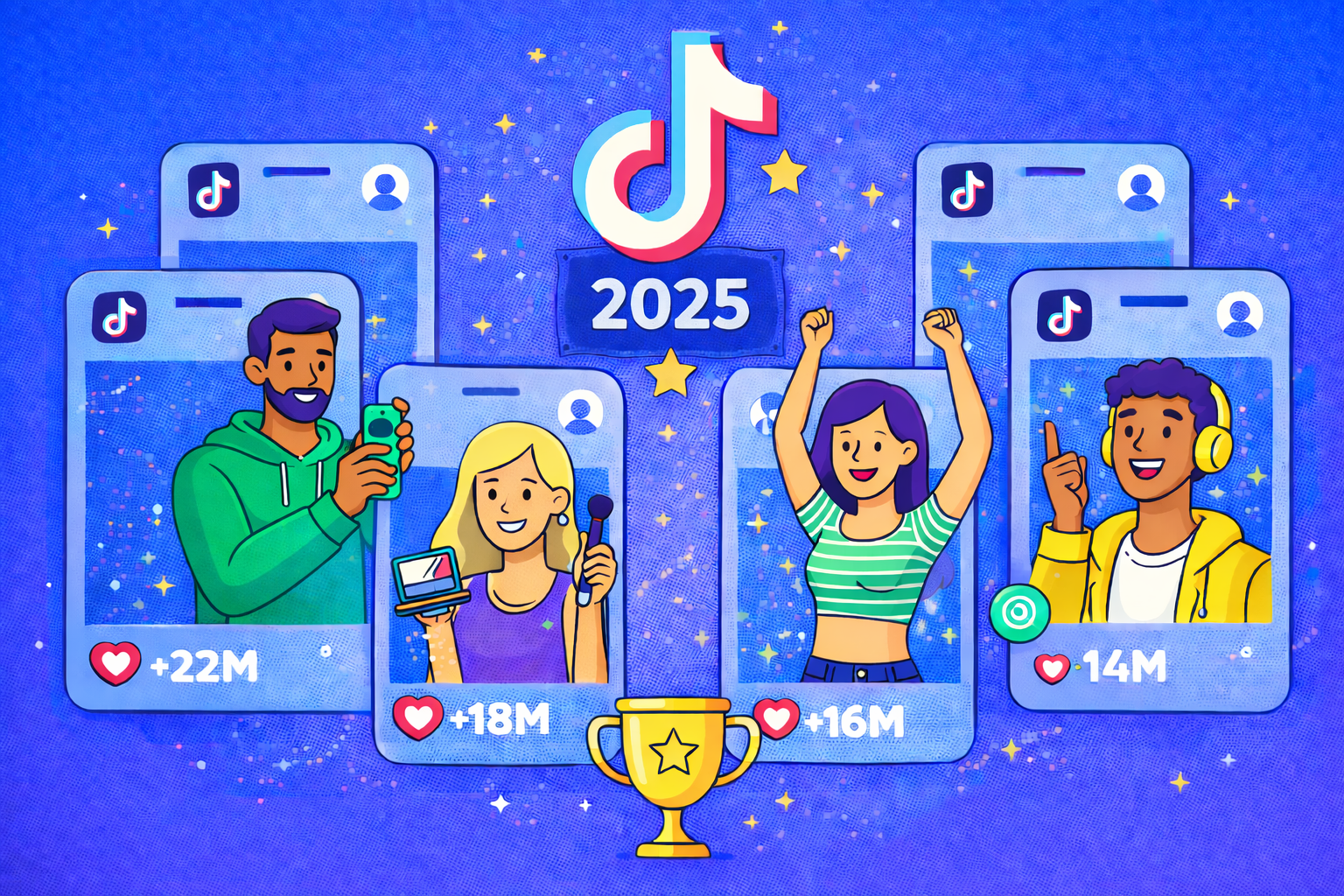
TikTok is no longer an experimental channel. It shapes culture, accelerates trends, and influences buying decisions faster than any other major platform. What makes TikTok powerful is not follower count alone, but speed of trust and discovery.
In 2025, brands succeed on TikTok when they partner with creators who understand platform-native storytelling, audience psychology, and short-form authenticity. The creators on this list influence not because they are polished, but because they are believable.
According to TikTok for Business, users are more likely to trust brands discovered through creator content than traditional advertising on the platform (TikTok for Business, 2024).
This list is not based on follower count alone.
Creators were selected using the following criteria:
Follower counts change quickly. Influence patterns last longer.
1. Khaby Lame
Khaby remains one of the most recognizable faces on TikTok. His silent, universal humor continues to resonate globally, making him effective for mass-appeal brand campaigns that rely on simplicity and clarity.
2. Charli D’Amelio
Charli’s influence has matured beyond dance trends. In 2025, her value lies in brand longevity, mainstream recognition, and crossover appeal across fashion, beauty, and lifestyle categories.
3. Addison Rae
Addison blends entertainment with entrepreneurship. Her evolution into beauty and media makes her a strong partner for brands seeking cultural relevance beyond TikTok.
4. Alix Earle
Alix has become one of the most commercially impactful TikTok creators. Her candid storytelling and lifestyle content consistently drive engagement and product sell-outs.
5. Bella Poarch
Bella’s creative visuals and music-driven content make her ideal for campaigns that rely on emotional tone, aesthetics, and storytelling rather than direct selling.
6. MrBeast
While best known for YouTube, MrBeast’s TikTok presence amplifies his influence. His content sets benchmarks for virality, generosity narratives, and large-scale brand integrations.
7. Chris Olsen
Chris’s conversational style and community-driven content perform well for brands focused on relatability, humor, and conversational engagement.
8. Brittany Broski
Brittany’s humor-driven commentary and cultural awareness make her highly effective for brands willing to embrace personality-forward campaigns.
9. Wisdom Kaye
Wisdom’s fashion authority positions him as a tastemaker rather than a trend follower. His influence extends into luxury and high-fashion spaces.
10. Mikayla Nogueira
Mikayla’s beauty expertise and transparent reviews continue to drive purchasing behavior, particularly in cosmetics and skincare.
11. Drew Afualo
Drew’s sharp commentary and values-driven content resonate with audiences seeking authenticity and social awareness, making her impactful for purpose-led brands.
12. Keith Lee
Keith transformed food reviews into a trust-based engine. His recommendations consistently influence local businesses and national brands alike.
13. Tabitha Brown
Tabitha’s calming presence and values-based messaging make her ideal for wellness, food, and lifestyle brands focused on community trust.
14. Tefi Pessoa
Tefi blends pop culture analysis with humor, making her content engaging for entertainment, media, and lifestyle brands.
15. Zach King
Zach’s visual storytelling and illusion-based content continue to stand out, offering brands creative integrations that feel native and memorable.
16. Monet McMichael
Monet’s beauty and lifestyle content combines relatability with aspirational storytelling, driving strong engagement among Gen Z audiences.
17. Noah Beck
Noah’s influence spans sports, fashion, and lifestyle, making him versatile for brands targeting younger demographics.
18. Dylan Mulvaney
Dylan’s storytelling and transparency create strong emotional connection, particularly for brands focused on inclusivity and community-driven narratives.
19. Brooke Monk
Brooke’s short-form humor and relatable scenarios perform well for brands seeking casual, high-frequency exposure.
20. Corporate Natalie
Natalie’s workplace satire resonates with millennial and Gen Z professionals, making her effective for B2B-adjacent and productivity brands.
TikTok partnerships succeed when brands respect the creator’s voice. Over-scripting reduces performance. Platform-native storytelling matters more than polished messaging.
Micro and mid-tier creators often outperform mega influencers on conversion and trust. According to Influencer Marketing Hub, engagement rates decline as follower count increases, reinforcing the value of relevance over scale (Influencer Marketing Hub, 2024).
Long-term partnerships consistently outperform one-off posts by building familiarity and audience confidence.
Success on TikTok should be measured beyond views.
Key indicators include:
Google Analytics and TikTok pixel tracking help connect creator activity to real outcomes (Google Analytics, 2024).
Brands often prioritize follower count over fit. Others apply Instagram-style polish to TikTok content, which reduces authenticity.
Another common mistake is ignoring disclosure requirements. The Federal Trade Commission requires clear disclosure of sponsored content, regardless of platform (Federal Trade Commission, 2023).
TikTok influencer marketing is moving toward deeper creator-brand alignment, trust-based storytelling, and measurable impact. Creators who understand audience psychology and platform culture will continue to outperform those chasing trends alone.
Brands that invest in relationships rather than reach will win in 2025 and beyond.
TikTok influence is not about virality alone. It is about credibility, consistency, and cultural relevance.
The creators on this list shape conversations, purchasing decisions, and trends. Choosing the right partner depends on your audience, values, and long-term goals.
Audit your TikTok strategy. Identify where creator trust can replace paid interruption. Start with relevance, test thoughtfully, and build partnerships that compound.
If this guide helped, share it with your team, leave a comment, or subscribe for weekly breakdowns of influencer and creator trends.
Federal Trade Commission. (2023). Disclosures101 for social media influencers.
https://www.ftc.gov/business-guidance/resources/disclosures-101-social-media-influencers
Google Analytics. (2024). UTM parametersand campaign tracking.
https://support.google.com/analytics/answer/1033867
Influencer Marketing Hub. (2024). Influencermarketing benchmark report.
https://influencermarketinghub.com/influencer-marketing-benchmark-report
TikTok for Business. (2024). What makesTikTok ads work.
https://www.tiktok.com/business